In times of uncertainty, every week counts. Projects can stall, teams lose direction, and leadership gaps quickly translate into lost opportunities. In such moments, the difference between recovery and prolonged disruption often comes down to how fast you can get the right leadership in place.
That’s where interim managers stand out.
Unlike traditional hires, who require weeks of onboarding and internal alignment, experienced interim executives are operational within days. They arrive with a clear mission, relevant industry experience, and the ability to assess, decide, and act — immediately.
They don’t need long introductions or internal politics explained; they focus on understanding what’s broken and fixing it. Their mindset is results-driven, not position-driven. That’s why companies call them in when something must move forward — fast.
Why it matters even more in an economic downturn
When markets tighten and budgets shrink, organizations can’t afford slow transitions or long learning curves. Interim managers bring:
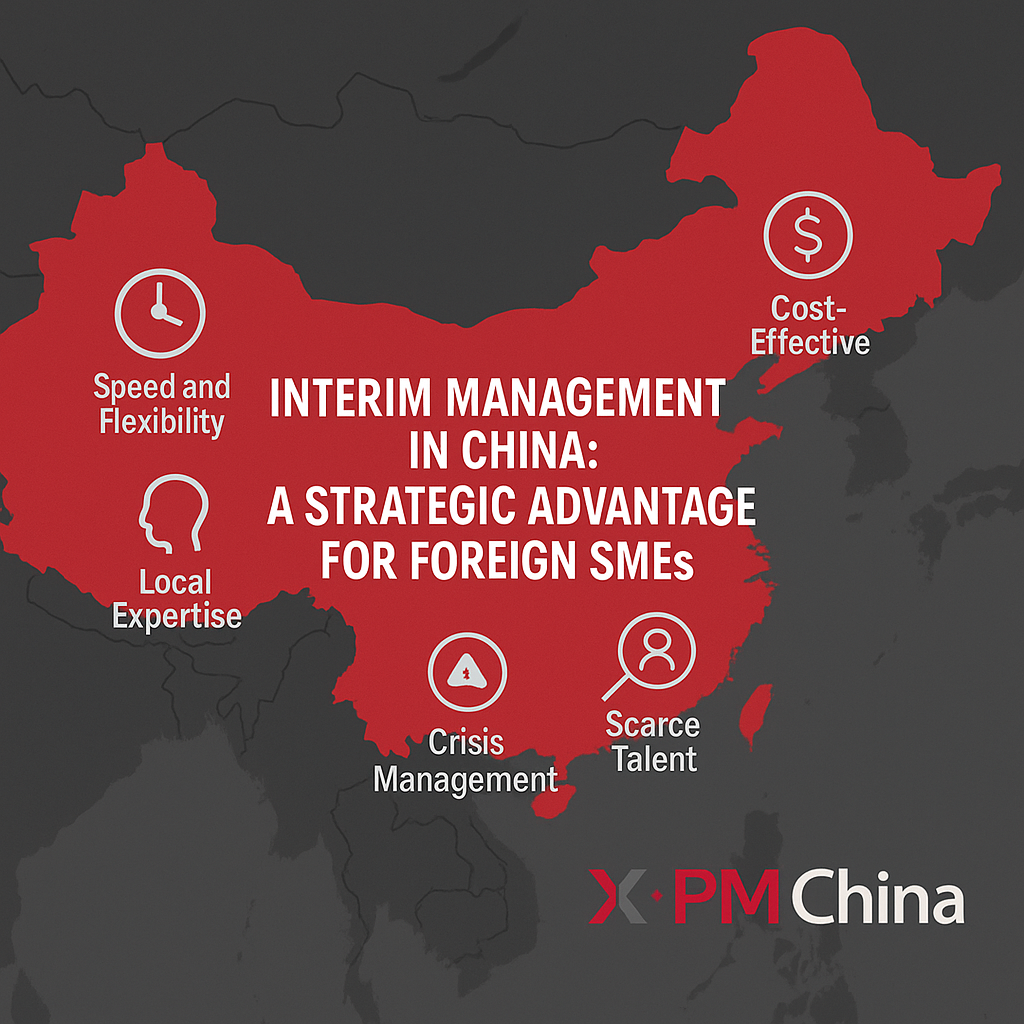
- Speed – They start delivering within the first week.
- Experience – They’ve navigated crises before and know what works.
- Focus – Their mandate is clear: stabilize, realign, and deliver outcomes.
- Flexibility – No long-term commitments, just measurable impact.
In today’s environment, agility is a strategic advantage. Bringing in a seasoned interim leader allows companies to stay decisive without adding long-term overhead — a smart move when every cost and decision is under scrutiny.
How X-PM China ensures impact from day one
At X-PM China, we don’t just provide an interim manager — we ensure the mission is precisely defined before it starts. Together with the client, we clarify objectives, priorities, and success criteria so the interim leader arrives with a sharp mandate and can focus on delivery from day one.
This structured approach is what enables speed and results: the right leader, a clear mission, and immediate execution.
Because in business, as in crisis management, speed of execution often determines the outcome.